
Summary: Drug overdose deaths continued to decline in 2025, though rates still exceed pre-pandemic levels, and federal funding cuts threaten harm reduction strategies.
Drug overdose deaths, US 2015-2025
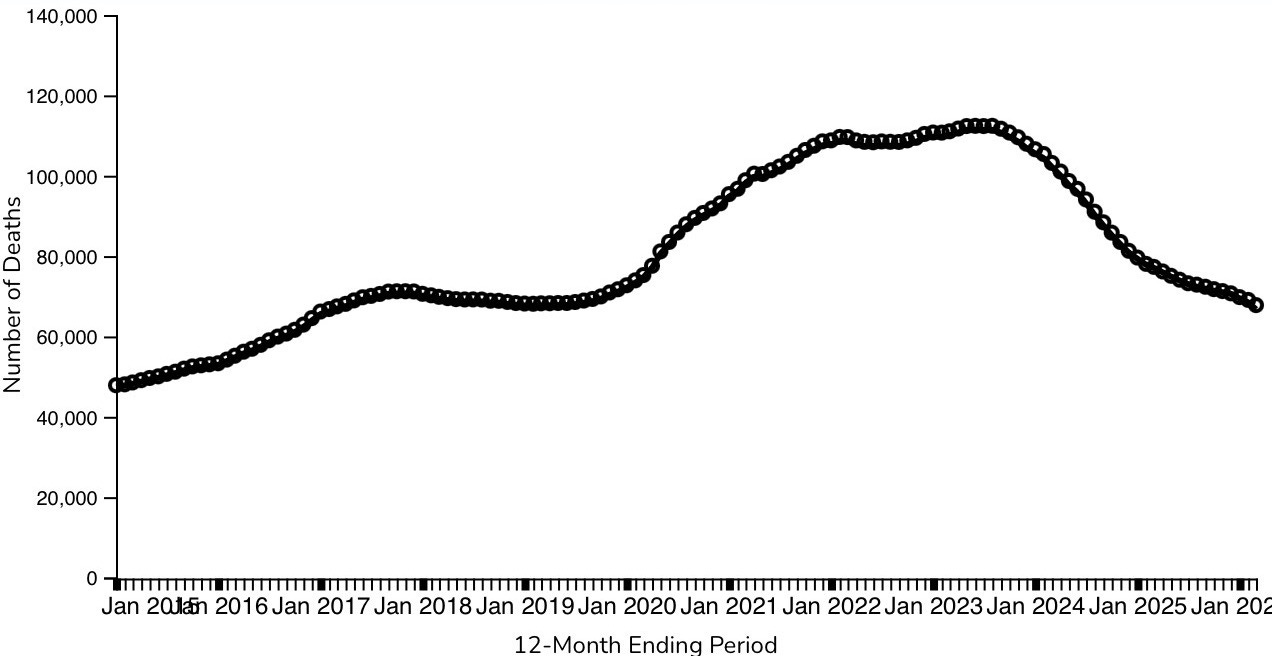
National Vital Statistics Center, Provisional Drug Overdose Death Counts, Centers for Disease Control and Prevention, August 4, 2026
The Centers for Disease Control and Prevention reported that the rate of deaths from drug overdoses continued to decline in 2025, although the death rate from drug overdoses remains higher than in the mid 2010s. Even with this improvement, drug overdose deaths remain the highest in the developed world. Drug overdose deaths are higher in the U.S. than in other developed countries (see below). The toll is felt broadly: two in five Americans report knowing someone who died of a drug overdose.
Experts generally credit harm reduction strategies, including widespread availability of naloxone (Narcan) to reverse opioid overdoses and availability of test strips to detect presence of fentanyl in drugs. Unfortunately, the US no longer allows communities to use federal dollars for purchase of naloxone and test strips. The federal government eliminated $1.7 billion in block grants and $350 million in addiction and overdose prevention funding. The federal Substance Abuse and Mental Health Services Administration has lost half of its staff over the last two years.
Access to medications for opioid use disorder (MOUD*) has been shown to lower the risk of death for those who have had previous overdoses, although current data suggests that only 25% of those who are eligible are treated with MOUD. Upcoming Medicaid cuts could decrease use of MOUD. Prescription of MOUD in emergency departments after a drug overdose could increase the number of those treated with MOUD.
For those with severe opioid use disorder, inpatient care can be lifesaving. However, there are few inpatient beds available, and few of those who could benefit from inpatient care receive it.
Overdose or drug-related deaths per 1 million population, 2019-2024
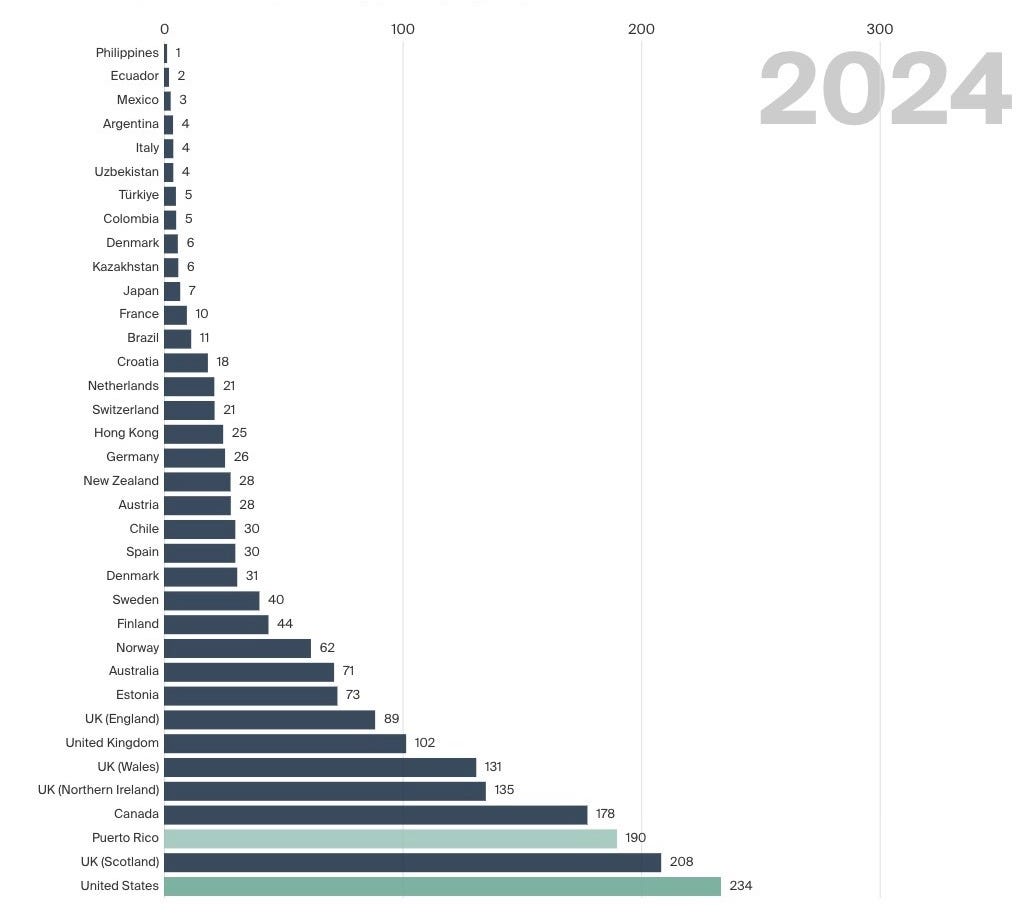
Source: Gumas, ED Overdose Mortality from a Global Perspective: Why Are Rates Falling? Commonwealth Fund, September 3, 2026
Implications for employers:
Employers can add naloxone to workplace first aid kits and can train employees to recognize signs of opioid overdose and administer naloxone in the event of overdose in the workplace
Here is a link to a National Institute of Occupational Safety and Health guide for employers seeking to provide naloxone for emergency on-site use.
Employers can also train managers and supervisors to recognize signs of opioid use disorder and refer employees to an Employee Assistance Program.
Employers can provide ready access to substance use disorder treatment, including MAT, for their plan members with opioid use disorder
Here are links (1) (2) to previous posts on employers and opioid overdose deaths.
*In previous posts I’ve labeled this as Medication Assisted Treatment, but (Medication for Opioid Use Disorder (MOUD) is now the favored term).