Pediatric surgery mortality is higher in low-volume hospitals
November 19, 2025

Summary: Pediatric patients had lower postoperative mortality if they lived in well-off neighborhoods and if they got their care in high-volume hospitals.
Mean in-hospital postop mortality by neighborhood opportunity level
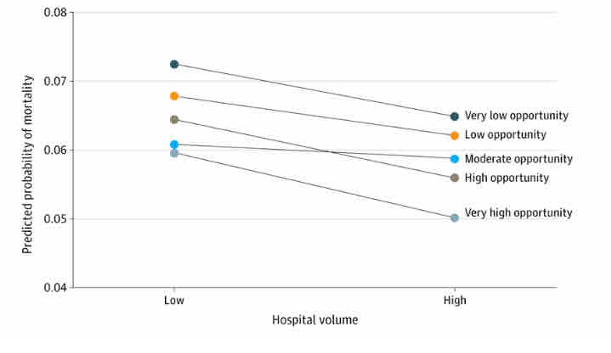
Tay, et al JAMA Network Open November 12, 2025 “Opportunity level” is the inverse of a deprivation score, so that residents of low opportunity neighborhoods have low incomes and residents of high opportunity neighborhoods have high incomes.
Death of children in the postoperative period is rare in the United States, but new published evidence shows substantial disparities in mortality risk.
Researchers reviewed a database of almost one million surgeries performed on children 18 or younger (average age 6) from 2012-2024; they determined risk-adjusted mortality rates, and correlated these to the child’s residential zip code. They found that children who lived in zip codes that had lower “opportunity levels” were more likely to die during a surgical hospitalization.
Hospitals that had higher surgery volume had lower rates of mortality for children regardless of the opportunity level of their zip code. However, children from the lowest opportunity zip codes had a higher risk of death even when they were treated at high volume hospitals compared to children who lived in the highest opportunity zip codes.
Time trends in postoperative mortality by neighborhood opportunity level
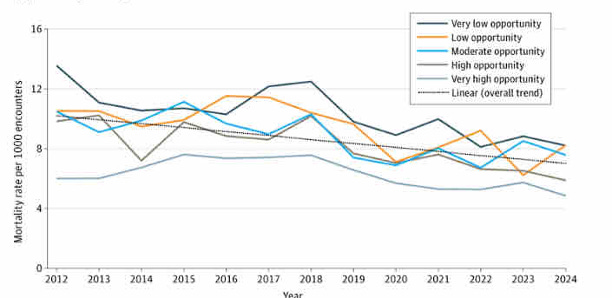
Tay, et al JAMA Network Open November 12, 2025
The second graphic demonstrates that overall rates of pediatric postoperative mortality (dotted black line) declined from 2012-2024.
Implications for employers:
Employers should be cautious of narrow network plans that exclude high volume pediatric hospitals.
This is a special challenge because there is rarely competition among children’s hospitals, and they often have the highest allowable rates in the community.
This demonstrates the importance of adjusting for sociodemographics when determining facility mortality rates.