Prior authorizations are variable across ACA marketplace plans
August 18, 2026

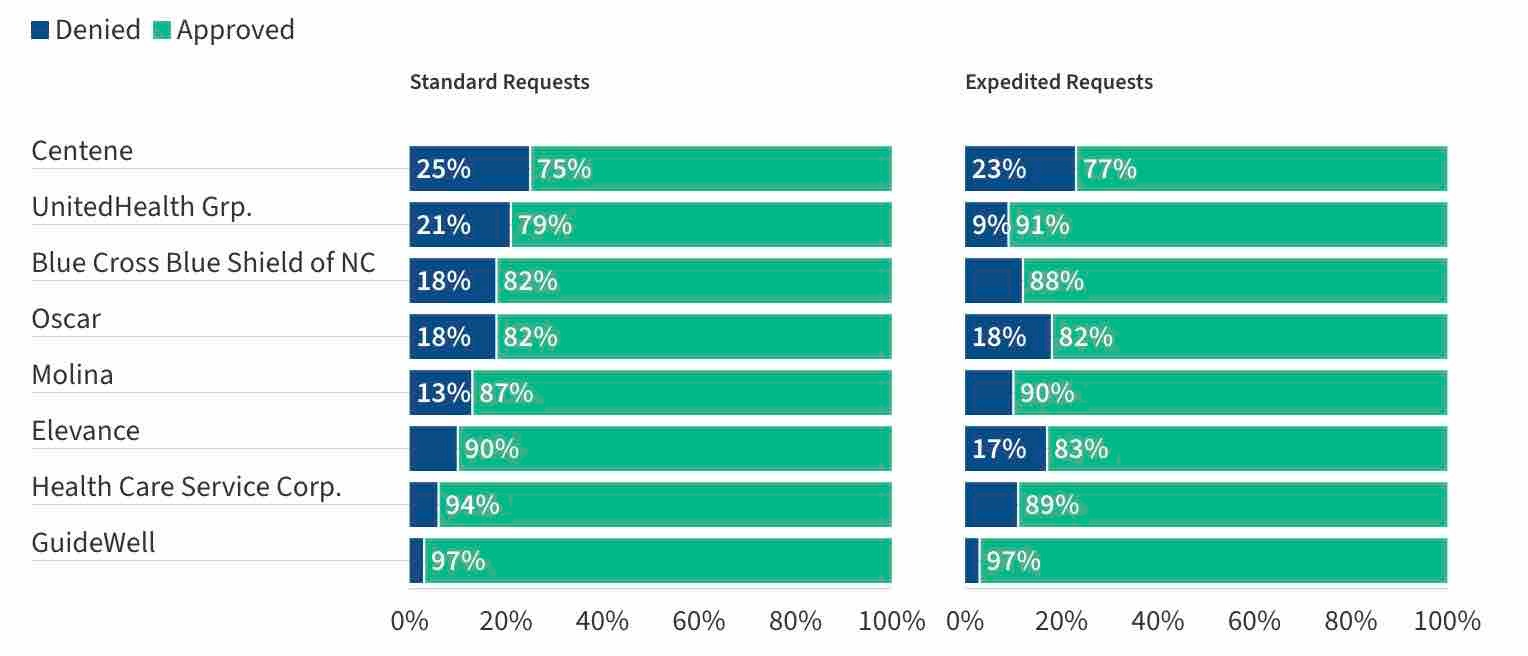
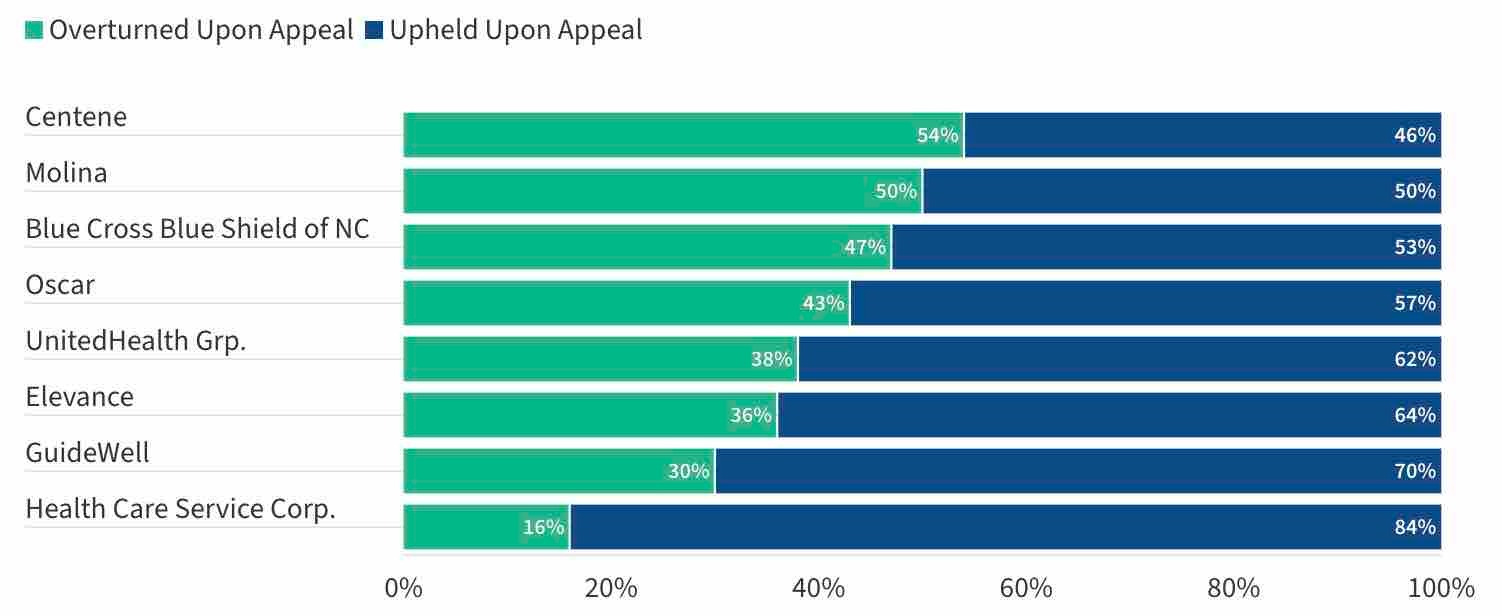
Summary: A KFF analysis of federally mandated prior authorization data finds that ACA Marketplace insurers denied an average of 18% of standard requests in 2025 and overturned an average of 43% of appealed denials.
Prior authorization denials by payer in ACA marketplace plans in 2025
Source: Long, M et al. Prior Authorization Metrics Provide New Insights into Insurer Practices, but Gaps Remain KFF August 13, 2026
A 2024 federal final rule requires insurers that sell plans that are overseen by the Centers for Medicare and Medicaid Services (CMS) to disclose basic information about denial rates of prior authorization requests. KFF analyzed this data, which is available for Medicare Advantage, Medicaid managed care, and ACA marketplace plans. This CMS database does not include self-insured employer health plans, but there are learnings here for plan sponsors.
The data above shows that denial rates were as high as 25%. Two of the national insurers that sell to large employers are missing from this analysis. The KFF researchers could not locate Aetna’s data, and Cigna (which is withdrawing from the ACA marketplace in 2027) likely had volume below KFF’s threshold for reporting.
The ACA marketplace plans are all fully-insured plans, and most employer-sponsored health plans are self insured. The incentives for denying prior authorization requests are higher for fully-insured plans, where the cost of requested services would come directly from the insurer’s bottom line.
Few denials are appealed, but between 16-54% of those that were appealed were eventually approved.
Appealed prior authorization denials were overturned more often by some insurers in the ACA marketplace
Source: Long, M et al. Prior Authorization Metrics Provide New Insights into Insurer Practices, but Gaps Remain KFF August 13, 2026
Prior authorization response times also varied, but no plans took more than a median of 4 days to respond to standard requests or more than a median of 1.2 days for expedited requests.
The KFF researchers noted substantial shortcomings in the dataset. The insurers did not provide numerators and denominators, and reported only average and median turnaround times. Most importantly for employers, there are no federal requirements for transparency in prior authorization responses for self-insured health plans. A few states (including Iowa and Massachusetts) have implemented regulations governing prior authorization and requiring public reporting. State regulations do not apply to self-insured health plans, as ERISA preempts state regulation.
Implications for employers:
Employers can ask for reporting from their carriers on the performance of their prior authorization programs.
The minimum data that employers should ask insurers to provide includes
Number of prior authorization requests requested and subsequently approved, denied, or withdrawn
Categories of prior authorization requests
How many of the denials were for technical issues (like missing data or patients no longer enrolled).
Timing - which should include median and also 75th and 90th percentile
Federal requirements could standardize reporting of prior authorizations for self-insured plans, but this would likely require legislation.
Prior authorization plays an important role in preventing low-value or even harmful services, but is a major cause of excess administrative costs and both plan member and provider dissatisfaction.