Surgery increases financial insecurity for those with private insurance
November 25, 2025

Summary: Those with private insurance who have a surgical procedure are more likely to report financial hardship.
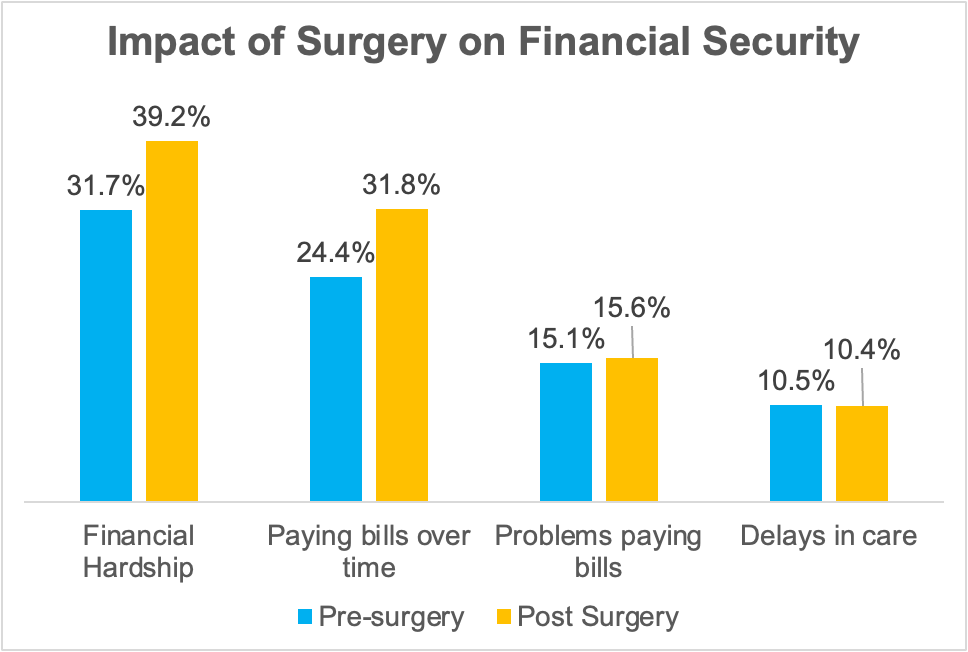
Source: Hernandez, et al JAMA Surgery November 19, 2025
Surgical care can be lifesaving, but it’s also expensive. Surgery not only means out-of-pocket costs, but can also decrease income, which can destabilize an employee’s finances. Even those with private insurance indicate that surgery, whether elective or emergent, worsens their finances.
Researchers reviewed data from the 2014 to 2021 Medical Expenditure Panel Survey (MEPS), a nationally representative survey conducted by the federal government. They found that for those with private insurance, financial hardship (problems paying medical bills, paying medical bills over time, or delaying medical care or prescriptions due to cost) rose almost one-quarter, from 31.7% to 39.2% with a surgical procedure. Financial insecurity did not increase for those on Medicaid, and increased only a modest amount for those on Medicare.
The baseline of financial insecurity among those with private insurance was quite high.
Implications for employers:
Many people of working age report that they are barely making ends meet, even before a surgical procedure worsens their financial situation.
Surgical procedures, whether elective or emergent, worsen self-described financial security.
Employers can improve their plan members’ financial security by offering plans that have modest deductibles, and by offering short- term disability insurance.
Many employers report that they will decrease plan benefits due to the current high rate of medical inflation, which could exacerbate the problem of plan member financial insecurity.
Employers can highlight financial wellbeing benefits, Employee Assistance Plan support and any availability of emergency funds during open enrollment.