Thanksgiving, 2025
November 26, 2025

It’s been a rough year for public health, with massive firings and grant cuts throughout the U.S. Department of Health and Human Services. Cuts in foreign aid have caused deaths in poor countries, and cuts to Medicaid and Affordable Care Act subsidies will diminish the health of Americans. But in the midst of all of this, I wanted to focus on some 2025 health policy news that I’m thankful for during this Thanksgiving season.
A. GLP-1 drugs
It seems that every month there are reports of new benefits from these drugs, largely from the newer, more potent drugs that are self-injected once a week. These are semaglutide (Ozempic, Wegovy, Rybelsus) and tirzepatide (Mounjaro, Zepbound). During this year, research has demonstrated that these drugs diminish onset of diabetes, cardiovascular disease, kidney disease, and liver disease.
The manufacturing shortage has now been resolved, and the prices of these drugs have declined by about half over the course of the year. Last week, both Lilly and Novo announced that they would sell these drugs directly to employers for a lower price than they can now obtain through pharmacy benefit managers. The Trump Administration announced that these drugs will be available to Medicare beneficiaries. We will learn the Medicare negotiated price for semaglutide in the next week or so.
These drugs are still too expensive, and a stress on many employers’ budgets. I’m hopeful that with further competition prices will continue to decline and these drugs will be available to more who can benefit from them.
B. Vaccinations
Vaccines have become polarizing, and the CDC pushed aside decades of science by changing its web site last week to falsely state that pediatric vaccines might cause autism. Still, there has been amazing progress in vaccination, including
increasing evidence that HPV vaccination prevents most cases of cervical cancer
a new mRNA influenza vaccine that is more effective than traditional flu shots.
Evidence of effectiveness of a malaria vaccine and a tuberculosis vaccine, which could save hundreds of thousands of lives globally
Further evidence that the combination of monoclonal antibodies and maternal vaccinations could lead to dramatic decreases in respiratory syncytial virus (RSV) in children under 1.
Preliminary evidence to suggest that vaccines can be developed fto combat pancreatic cancer.
C. Telemedicine
Telemedicine regulation moved forward, extending telemedicine access by removing the requirement for in-person initial treatment. Telemedicine is already key to mental health and abortion access, and can continue to offer increased access to providers whose cultural backgrounds or personal characteristics align with those of their patients. Telemedicine is increasingly important for care of chronic diseases and holds some promise to improve primary care.
D. Opioid death rates
Mortality from opioid overdoses remains far too high, but continues to decline. A combination of education, decreased fentanyl, and access to fentanyl detection strips and naloxone (Narcan) has helped bring narcotic death rates back to where they were before the pandemic.
E. State health policy activism
As the federal government steps back from its roles funding and regulating health care, many states have stepped up. This includes protecting patients from overly aggressive medical collections, controlling drug prices, capping prices for state employees, and limiting out-of-pocket costs. Here are links to podcasts on this from Arm and a Leg and Tradeoffs.
F. Leadership makes a difference
Here’s a gift link to an article in yesterday’s New York Times about cutting Cesarean Section birth rate at Rochester General Hospital. When new Chair of Obstetrics Elizabeth Bostock became the leader of the department in 2019, the CS rate for first time mothers was 40%. She instituted checklists, changed incentives, and had difficult conversations with physicians. The rate is 25% this year. Here’s a link to an article I published on what employers can do in Harvard Business Review.
Longform:
This weekend, I urge you to read Tatiana Schlossberg’s heartbreaking essay “The Battle with My Blood” in the New Yorker. She is a grandaughter of JFK and a mother of two very young children, and has reached the end of aggressive treatment for Acute Myeloid Leukemia (AML).
* * * * * * *
The next post for Employer Coverage will be on Monday, December 1. I hope you and yours have a wonderful Thanksgiving weekend. (Scroll down for animal photo)
Thanks for reading! Hope you’ll subscribe to this newsletter, and please hit the “like” button. Please also recommend this newsletter to friends and colleagues - it’s free. You can find previous posts at this link.
Views expressed in Employer Coverage are purely my own.
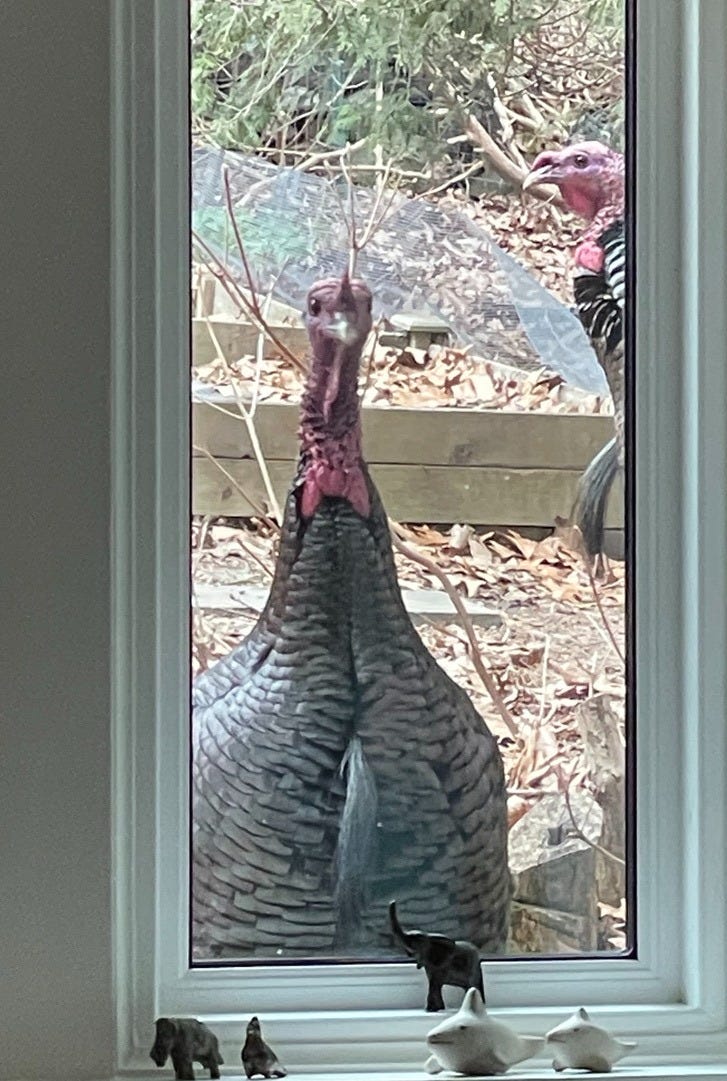
Animal Photo: Two turkeys looking into our living room in Belmont, MA
Thanks for this gratitude post. In addition to the other items you posted, I read Tatiana Schlossberg's essay...it was a hard read and heartbreaking for her young family (and her broader family). I hope others read it too, because we should all be grateful for our health.