Working while sick is common in shift workers
June 29, 2026

Summary: A study of shift workers found that points-based attendance systems dramatically increase presenteeism, with 93% of penalized workers reporting coming to work sick, effectively nullifying the protections that state paid sick leave mandates were designed to provide.
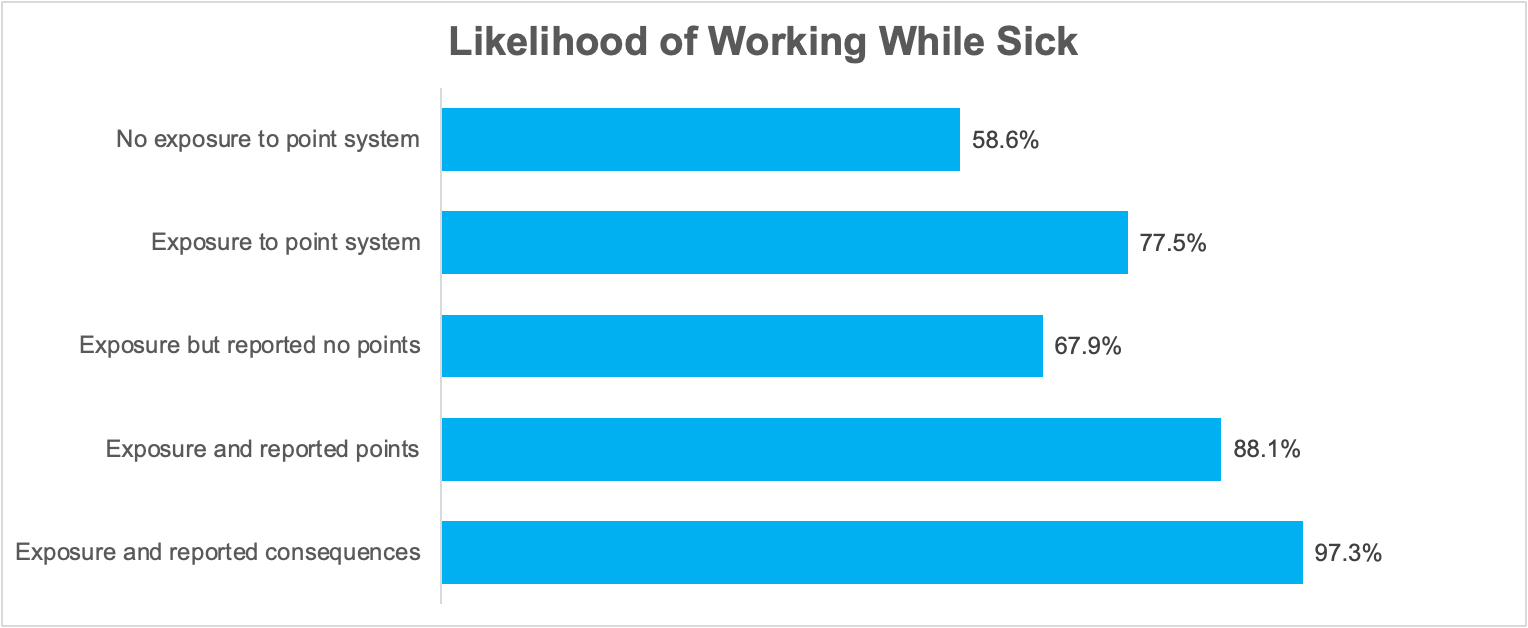
Source: Slopen, M et al Points-Based Attendance Systems Associated With Presenteeism Despite Paid Sick Leave Protections Health Affairs June, 2026
Many states have enacted paid sick leave laws to give workers, particularly low-wage hourly employees, the legal right to take time off when ill without losing pay or their jobs. Sick workers are less productive and more prone to errors that can harm themselves, their coworkers, or the customers they serve. Sick workers with infectious illnesses also risk transmitting disease to coworkers and the public, a concern with implications well beyond individual productivity. Parents of young children face particular pressure, since sick children are typically barred from school or daycare, forcing a parent to choose between staying home and losing income.
However, some employers have implemented points-based attendance systems that penalize workers for absences regardless of the cause. Penalties can range from warnings to suspension or termination. Proponents argue that point systems are easier to administer uniformly and reduce the risk of supervisory bias, such as scrutinizing some workers’ absences more than others’, in determining whether time off was legitimate. This research shows, however, point-based systems can effectively nullify the protections sick leave mandates are designed to provide.
Researchers drew on a national database of shift workers and surveyed participants about their attendance behavior when ill, including whether their employer used a points-based system. Nearly half of respondents (49%) worked for an employer with a points-based attendance system, suggesting these policies are now widespread in shift-work industries. The researchers defined “presenteeism” as coming to work while sick, and did not measure employee productivity.
Overall, 58.6% of workers reported coming to work sick at least once in the prior year. This increased to 77.5% of workers whose employers had a points-based attendance system. The researchers found that those who reported that they had received points were more likely to work when sick, and 93% of those who had been penalized for attendance points reported working while sick. Notably, state paid sick leave mandates showed no association with reduced presenteeism, suggesting that legal protections alone are ineffective when attendance point systems impose direct penalties for taking the leave those laws guarantee.
The United States remains one of the few wealthy nations without a federal paid sick leave mandate, a policy gap this research suggests carries real consequences for worker and public health.
Previous posts on sick leave
Sick leave associated with lower incidence of child abuse
Sick leave mandates decreased gender gaps in sick leaves
Implications for employers:
Point-based attendance systems substantially increase presenteeism, reduce productivity and create an increased risk of spreading illness to coworkers and customers. With rising communicable diseases in the US, employers may want to review their internal risk policies to respond to these threats if/when they occur.
Low-wage workers often have little financial cushion and the threat of adverse attendance points could force them to work while ill, risking prolonging illness and reducing long-term productivity.